Table of Contents
- The short answer: which Porto wine tour should you choose?
- Porto vs Gaia vs Douro: understand the geography first
- What happens on a Port cellar tour in Vila Nova de Gaia
- Which Port cellar should you visit?
- When a Douro Valley wine tour from Porto is worth it
- Group tour, private tour, train, or self-drive?
- How to fit wine into a Porto itinerary
- Best time for Porto wine tours
- What to book ahead
- Common Porto wine tour mistakes
- Mini-story: the family that needed comfort more than another tasting
- What non-wine drinkers can enjoy
- Suggested Porto wine itineraries
- How Travel-Luck planning helps with Porto and wine trips
- FAQ: Porto wine tours
- Final advice: choose the wine day that fits the trip
The best Porto wine tour depends on how much time you have: choose a Vila Nova de Gaia Port cellar tour if you have half a day, a Porto food and wine walk if you want the city experience, and a Douro Valley wine tour from Porto if you want vineyards, river views, and quintas. For most first-time visitors, the calmest plan is one good Gaia cellar tour plus one well-paced Douro day, not a rushed list of every famous lodge.
That sounds simple, but Porto wine planning gets confusing quickly. A traveler searches for "porto wine tour" and sees cellar tickets, food walks, river cruises, Douro Valley day trips, private drivers, museum passes, and tasting rooms all described as if they are the same thing.
They are not. They solve different travel problems.
I see this often when I help travelers plan Portugal. Someone has two nights in Porto and wants to book three cellars, a Douro Valley tour, a food walk, and dinner across the river in Gaia. The better answer is usually quieter: choose the wine experience that matches the trip, then leave enough room to enjoy Porto itself.
This guide will help you decide what kind of Porto wine tour fits your dates, your pace, and your level of wine interest. You will also see when it is worth adding the Douro Valley, what to book ahead, and how to avoid the most common planning mistakes.
Key Takeaways
- The classic Porto wine tour is usually a Port cellar visit in Vila Nova de Gaia, across the river from Porto's Ribeira.
- Choose a Douro Valley wine tour from Porto if you want vineyards, quintas, river views, and a full-day countryside experience.
- One good cellar tour is better than rushing through several similar tastings in the same afternoon.
- Book ahead for English tours, premium tastings, summer dates, weekends, and harvest season.
- If Porto and Douro need to fit into a wider Portugal route, plan the wine day before locking hotels and transfers.
If you want Julia to fit Porto, Gaia, and the Douro into a realistic wider route, start with the Travel Planner service. A wine day works best when it supports the whole Portugal itinerary, not when it steals time from everything else.
The short answer: which Porto wine tour should you choose?
If this is your first Porto wine tour, start by choosing the format, not the brand name. The right choice depends on whether you want history, food, scenery, convenience, or a deeper wine experience.
| Tour type | Best for | Time needed | What you get | Watch-outs |
|---|---|---|---|---|
| Gaia Port cellar tour | First-timers, short stays | 1-2 hours | Port history, barrel rooms, tasting | Can feel repetitive if you book too many |
| Premium Port tasting | Wine lovers | 1-2 hours | Aged Tawny, Vintage, LBV, deeper education | Higher cost, book ahead |
| Porto food and wine walk | Food lovers, social travelers | 3-4 hours | City neighborhoods, snacks, wine bars | Less cellar history |
| Douro Valley day tour | Scenery, vineyards, quintas | 9-11 hours | Transport, tastings, lunch, river views | Long day, fixed pacing on group tours |
| Private Douro tour | Couples, families, groups | Full day | Flexible pace, tailored wineries | Higher budget |
| WOW or wine museum | Rainy day, mixed interests | 2-5 hours | Wine culture, museums, restaurants | More cultural than winery-specific |
For a short Porto stay, I would usually choose one Port cellar in Gaia and one strong meal or wine bar in Porto. If you have at least three nights in Porto, then a Douro Valley day trip becomes easier to justify.
If wine is the main reason you are visiting northern Portugal, give it more space. A three-day Porto wine rhythm can work beautifully: one day for Porto food and neighborhoods, one for Gaia cellars, and one for the Douro Valley.
Porto vs Gaia vs Douro: understand the geography first
The most useful thing to know before booking is that "Porto wine tour" can mean three different places.
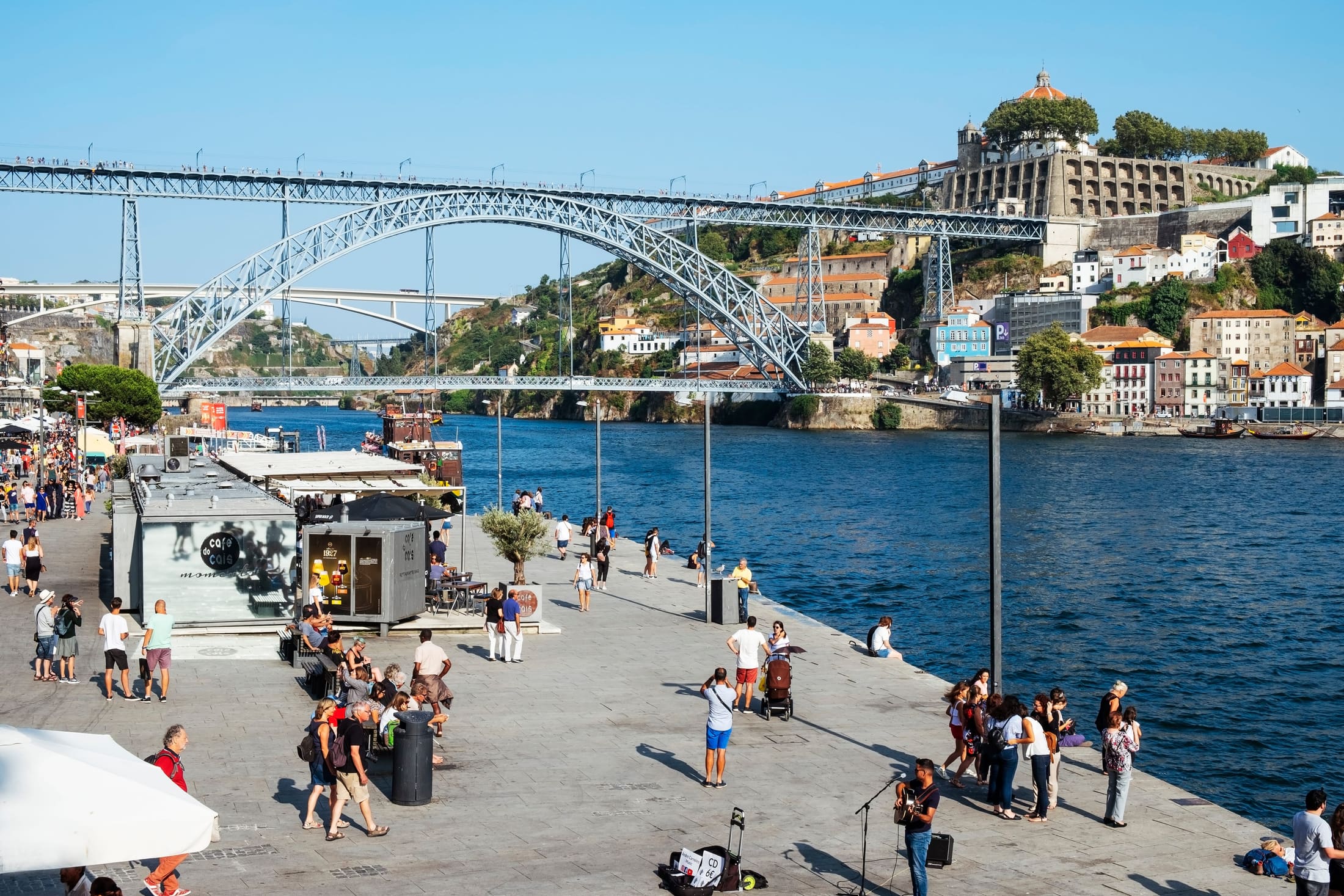
Porto is the city on the north bank of the Douro River. This is where many travelers stay, eat, wander, shop at Bolhao Market, climb toward Clerigos, and find wine bars serving bottles from across Portugal.
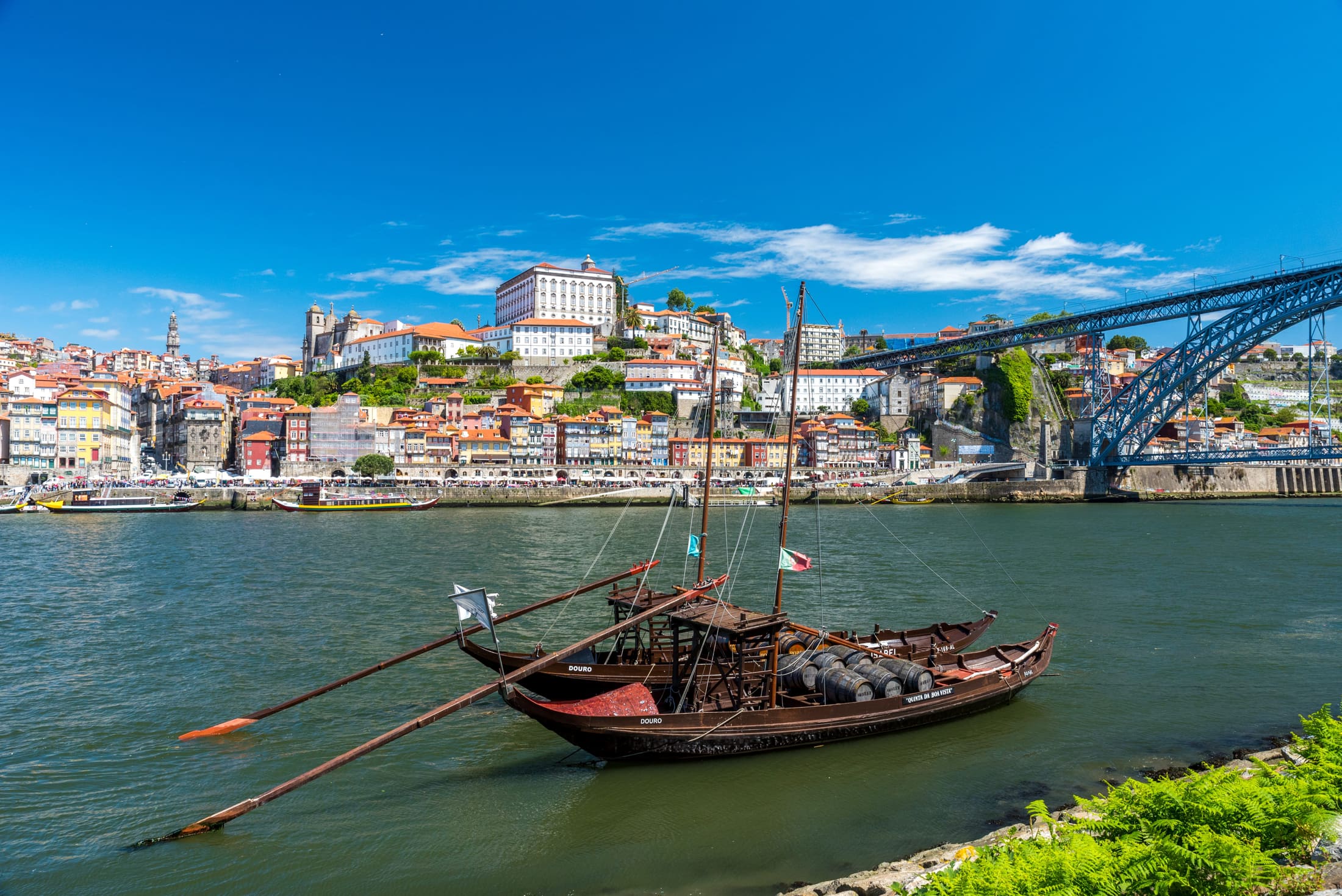
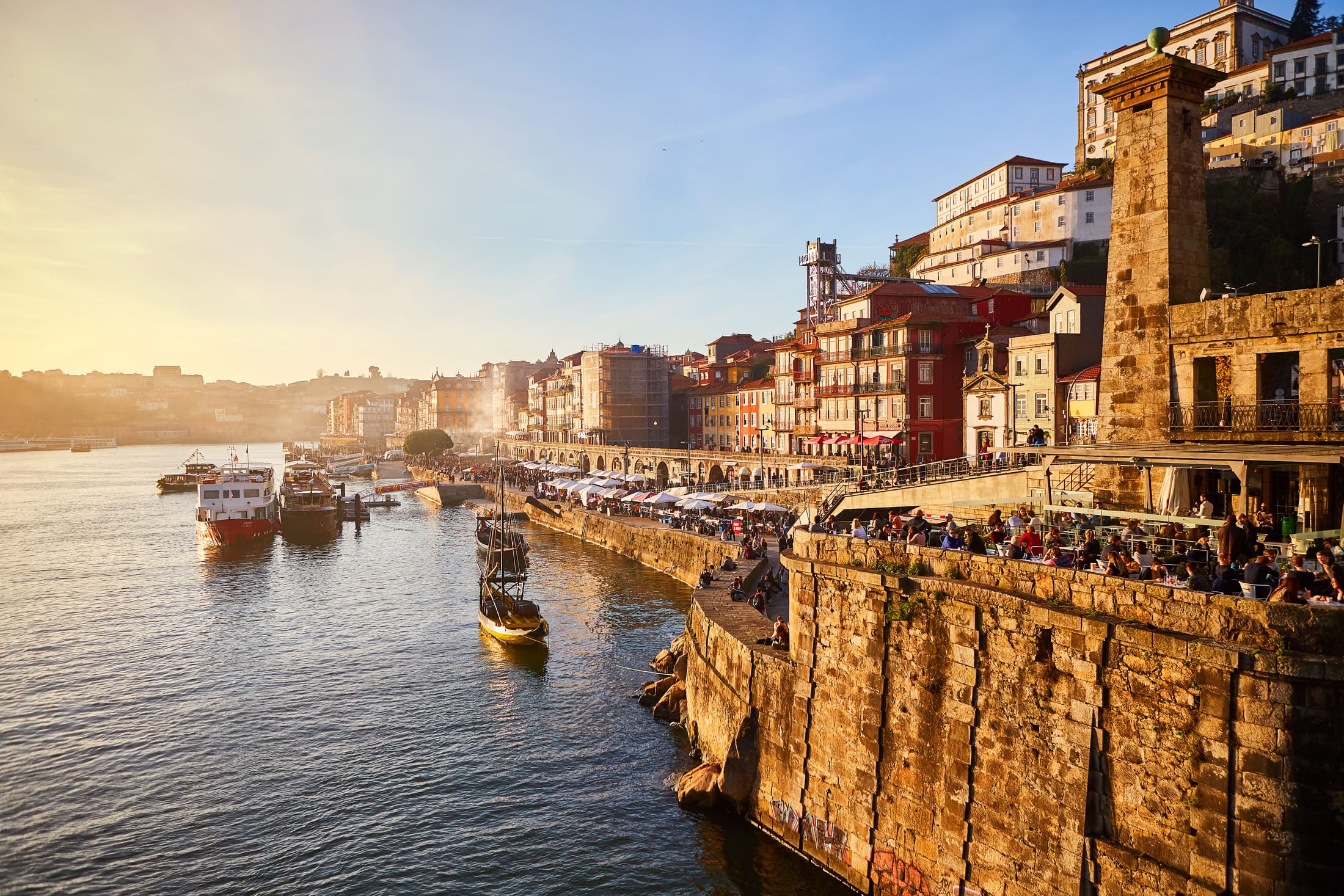
Vila Nova de Gaia is across the river from Porto. This is where the historic Port lodges and cellars are concentrated. The official Porto Region tourism site describes Gaia as the home of Port wine, where old warehouses store and age the wine in oak barrels, with more than 20 cellars on the river banks.
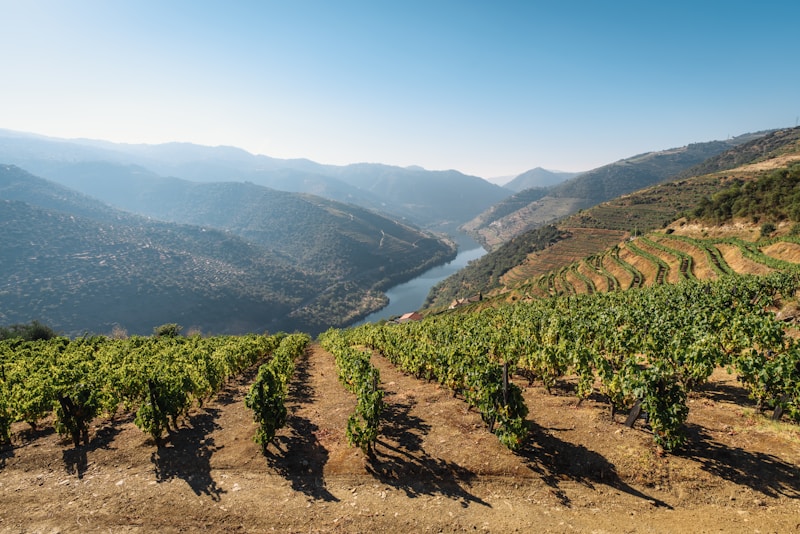
The Douro Valley is inland wine country. This is where the grapes grow, the quintas sit among terraced hillsides, and the river curves through one of Portugal's most dramatic landscapes. UNESCO describes the Alto Douro Wine Region as a cultural landscape where wine has been produced for about 2,000 years, with Port wine regulated since 1756.
This geography matters because each place gives you a different kind of wine day.
Gaia teaches you Port history. Porto gives you the city, food, and wine-bar atmosphere. The Douro Valley gives you the land itself.
Trying to make one tour do all three is where many itineraries start to wobble.
What happens on a Port cellar tour in Vila Nova de Gaia
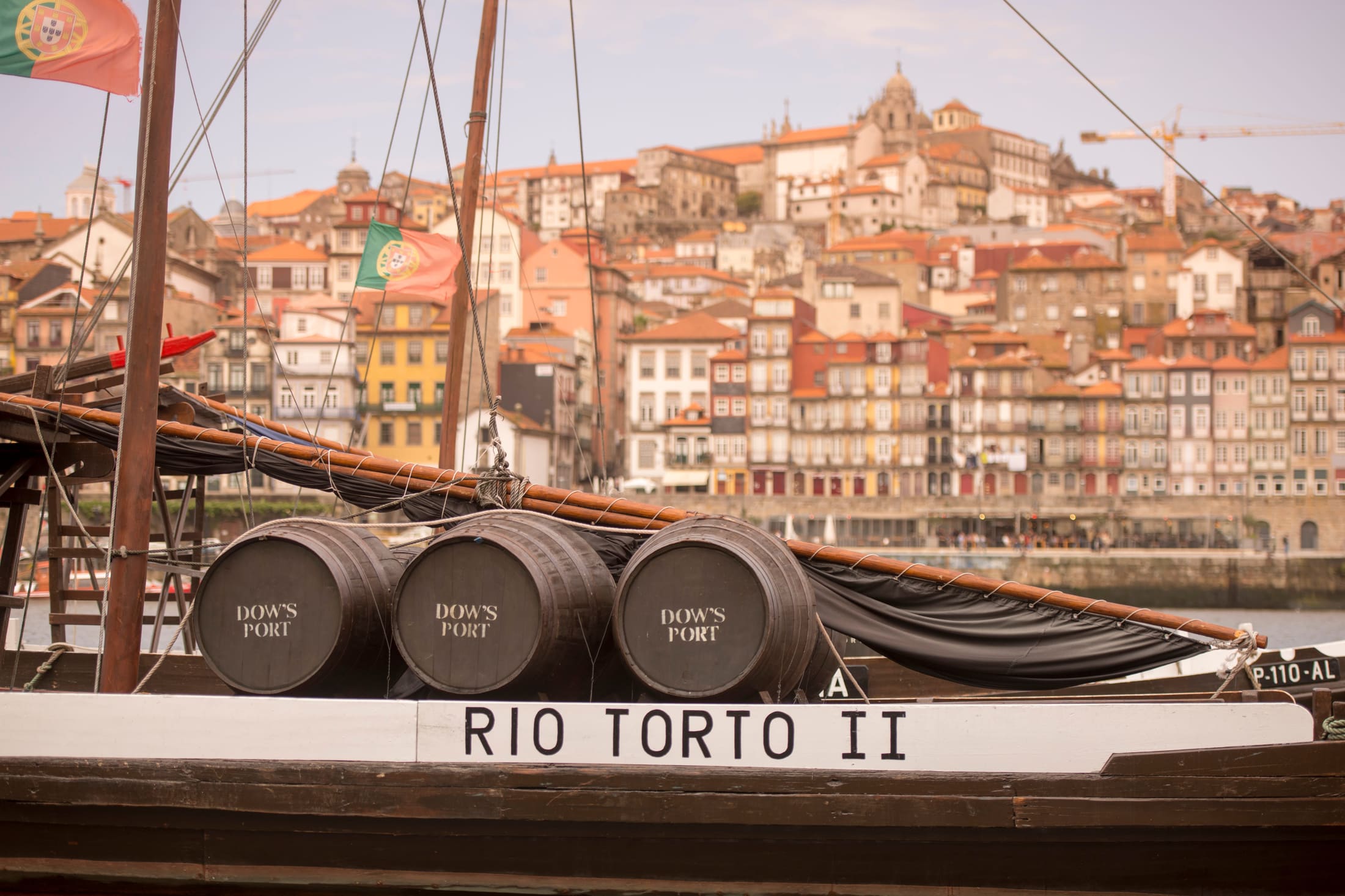
A Port cellar tour in Gaia is the easiest and most classic Porto wine experience. You cross the river, check in at a lodge, walk through cool barrel rooms or museum-style exhibits, learn how Port is made and aged, then finish with a tasting.
Most first-time tours explain the basic difference between Port styles. The IVDP Port wine introduction is a useful official reference: Ruby wines keep more fruit and deep color, Tawny wines age in cask or vat and develop dried-fruit and wood notes, White Port varies by sweetness and age, and Rose Port is usually served young and chilled.
You do not need to know these terms before you arrive. A good cellar tour should make them clear without turning the afternoon into a wine exam.
How many Port cellars should you visit?
For most travelers, one proper cellar tour is enough. Two can work if you are genuinely interested in comparing houses or tasting styles. Three in one day is rarely as good as it sounds.
Port is fortified, sweet, and usually poured in small but meaningful amounts. The explanations also repeat. By the third barrel room, many people are no longer learning, they are just checking off names.
I would rather see you do one good tour, have lunch, walk the Gaia riverfront, and enjoy the view back to Porto.
What to book ahead
Book ahead if you care about a specific house, an English-language tour, a premium tasting, a weekend slot, or travel in summer and harvest season. Some cellars may accept walk-ins at quieter times, but this is not something to build a careful itinerary around.
Taylor's, for example, confirms on its official site that its Port cellars are in Vila Nova de Gaia and that visits and tastings are bookable. Use that kind of direct provider page when checking final availability, rather than relying only on a marketplace listing.
What to wear and expect
Wear shoes that can handle cobbles, slopes, and polished cellar floors. Gaia looks compact on a map, but it is hillier than many travelers expect, especially if you choose lodges away from the riverfront.
Cellars can be cooler than the street, so a light layer is useful outside summer. If mobility is a concern, check the exact route before booking. Some historic buildings are easier than others.
Which Port cellar should you visit?
There is no single best Port cellar for every traveler. The right one depends on your interest, location, mobility, and whether you want a polished overview or a quieter tasting.
I would choose by purpose.
Best for classic first-time context
Choose a well-known house with a clear visitor experience and strong educational structure. Names travelers often compare include Taylor's, Graham's, Sandeman, Ferreira, Calem, Cockburn's, and Fonseca.
The point is not to collect the most famous label. It is to leave understanding why Port is aged in Gaia, how Ruby and Tawny differ, and what you actually enjoy drinking.
Best for premium Port tasting
If you already like Port, look for a slower tasting focused on aged Tawny, Vintage Port, LBV, Colheita, or food pairing. These are better for wine lovers than for someone who only wants a quick introduction.
Premium tastings should be booked ahead. They are also best when you leave space around them. A serious tasting followed by a rushed restaurant reservation across town is not the mood.
Best for easy logistics
If you are staying in Ribeira or near the river, choose a Gaia cellar that fits your walking comfort. Riverfront and lower-Gaia options are easier. Some excellent lodges sit higher on the hill, which can be worth it for the view, but less ideal for older parents, children, or anyone who dislikes climbs.
This is where small planning details matter. A ten-minute walk on flat ground and a ten-minute walk uphill after tasting Port are not the same thing.
Best for mixed-interest travelers
If not everyone in the group cares deeply about wine, pair one cellar with something else: lunch in Gaia, the riverfront, Jardim do Morro, the cable car, or the WOW cultural district.
That combination usually works better than asking the whole group to sit through a second technical tasting.
Best for food pairing
Some travelers are happiest when wine is tied to food. In that case, look for a tasting with cheese, chocolate, or a proper meal. Verify the current menus before booking because pairing formats change.
For a broader wine-country angle, pair your cellar day with the Douro Valley wine tasting guide. Porto is not only about Port, and the best wine memories often happen at the table.
When a Douro Valley wine tour from Porto is worth it
A Douro Valley wine tour from Porto is worth it if you want the vineyard landscape, not only the cellar story. Gaia explains how Port ages. The Douro shows where the wine begins.
This is a full-day commitment. You are not popping out for a quick tasting between brunch and dinner. A good Douro day usually involves transport from Porto, one or two quinta visits, lunch, viewpoints, and sometimes a short river cruise near Pinhao or another valley stop.
It works best if you have at least three nights in Porto or if wine is one of the main reasons for your trip.
It is less ideal if you only have one full day in Porto and have never seen the city. In that case, a Gaia cellar tour will give you wine context without taking the whole day away from Porto.
A realistic Douro day
The day usually starts early. You leave Porto in the morning, reach the valley, visit a quinta, eat a long lunch, taste again or take a short river segment, then return to Porto in the evening.
The most common mistake is adding too much. Four wineries, a cruise, a viewpoint, a long lunch, and a late dinner back in Porto is a plan that looks fine in tabs and feels tiring in real life.
Two quality tastings and lunch usually beat a checklist of stops.
Day trip or overnight?
A day trip is enough for a first taste. An overnight is better if you want sunset, a slower dinner, smaller producers, or the feeling of waking up in the valley instead of watching it through a van window.
If you are deciding between the two, read the existing Douro Valley wine trail and look at the wider trip. A one-night Douro stay can be wonderful, but not if it forces the rest of Portugal into a race.
Mini-story: the couple with too many tabs
Emma and Daniel came to me with two nights in Porto and twelve saved links. They wanted a food walk, three Gaia cellars, a Douro Valley tour, Livraria Lello, a six-bridges cruise, and a dinner reservation with a view.
Nothing on the list was wrong. The problem was the sequence.
We kept one cellar, one Porto food evening, and a Douro day only because they were continuing south by private transfer afterward, which made the timing easier. Their final plan had fewer bookings, but it gave them a better trip: one real wine lesson, one city night, and one countryside day they could remember clearly.
That is the goal.
Group tour, private tour, train, or self-drive?
How you reach the Douro matters as much as which winery you visit. The valley is beautiful, but it is not a simple grid of wineries around one station.
Group Douro tour
A group tour is the easiest budget-friendly option. It usually bundles transport, tastings, lunch, and sometimes a boat ride.
This can be perfect if you want convenience and do not need much control. It is less perfect if you have strong wine preferences, mobility needs, dietary requirements, or a group that does not enjoy being moved on a fixed schedule.
Read inclusions carefully. "Douro wine tour" can mean very different things depending on the operator: one winery or two, lunch included or not, big bus or small van, river cruise included or optional.
Private Douro tour
A private Douro tour is best for couples, families, older travelers, special occasions, and anyone who wants the day paced around them. It gives you more control over pickup, wineries, lunch, viewpoints, and rest stops.
It is also the better fit when comfort matters. A family with grandparents may need fewer stairs and a slower lunch. A honeymoon couple may care more about the view and the meal than seeing the maximum number of wineries. A serious wine traveler may want still Douro DOC wines, not only Port.
If you want tastings, lunch, transfers, and confirmations coordinated rather than managed from scattered tabs, Travel Support is the practical next step.
Independent train day
The train from Porto into the Douro can be scenic and lovely, but it needs realistic expectations. Stations such as Peso da Regua and Pinhao can work as anchors, yet many quintas are not sitting directly beside the platform.
That last-mile issue matters. You may still need a taxi, a driver, or one carefully chosen tasting close enough to reach without stress.
If you plan by train, verify current CP schedules before booking around a train day. Do not rely on an old blog itinerary for transport times.

Rental car
A rental car gives flexibility, but I do not usually recommend it as the default for a wine-tasting day. The Douro roads can be narrow and winding, and the driver should not be tasting heavily.
Self-drive makes more sense if one person is comfortable with the roads and happy to limit wine. It can also work for an overnight stay where you are not trying to taste and drive all day.
For a first-time visitor who wants a wine-focused day, a guided or private option is usually calmer.
How to fit wine into a Porto itinerary
The right Porto wine tour depends on how many days you actually have. A tour that is perfect on a three-night stay can be the wrong choice on a one-day visit.
| Time in Porto | Best wine plan | Why it works |
|---|---|---|
| One day | Porto city plus one Gaia cellar | You get wine context without losing Porto |
| Two days | One city day, one Gaia/wine-bar day | Balanced and not rushed |
| Three days | Porto, Gaia, Douro day trip | Enough time for city, cellar, and valley |
| Four or more days | Add a slower Douro stay or deeper tastings | Better for wine-focused travelers |
If you have one day in Porto
Do not spend your only day on a full Douro Valley tour unless wine is the entire reason you came. Porto itself deserves time.
A better one-day rhythm is morning in the city, lunch, one Gaia Port cellar in the afternoon, then sunset from Gaia or Jardim do Morro. You will understand the wine story without missing the city.
If you have two days in Porto
Use one day for Porto neighborhoods, food, viewpoints, and a relaxed meal. Use the second for a Gaia cellar plus a wine bar, WOW, or a longer lunch across the river.
If scenery matters more than city time, replace the second day with the Douro Valley. Just know what you are trading away.
If you have three days in Porto
This is the sweet spot for many travelers. Day one can be Porto food and neighborhoods. Day two can be Gaia and Port cellars. Day three can be the Douro Valley.
The order matters. I like doing the cellar before the valley because it gives you context. You understand the Port styles in Gaia, then see the landscape where the grapes begin.
If you have four or more days
Now you can slow down. Add a Douro overnight, a premium tasting, a second smaller cellar, or a Portuguese wine bar focused on regions beyond Port.
You might also consider whether northern Portugal deserves more of the trip. Porto, Douro, and Vinho Verde can easily become a meaningful regional itinerary, not just a stop between Lisbon and the Algarve.
Best time for Porto wine tours
Porto wine tours work all year, but the best choice changes by season.
Spring is one of the easiest periods for city walking and Douro scenery. The weather is usually more comfortable than high summer, and the valley is fresh and green.
Summer is busy. Porto can handle it, but the Douro Valley is hotter inland, and popular English tours can sell out. Book ahead, start earlier, and avoid overstuffing the day.
September and October are strong wine months because of harvest atmosphere. They can also be busy, especially for Douro experiences. If you want harvest-related activities, do not assume you can improvise.
Winter is underrated for Gaia cellars, Porto food, and wine bars. Cellars are indoors, meals feel cozy, and the city is quieter. The Douro can still be beautiful, but daylight, rain, and winery availability need more attention.
The safest rule is simple: book the wine experiences that matter most, then keep the rest of the day flexible.
What to book ahead
You do not need to schedule every glass of wine in Porto. But the important pieces should be reserved.
Book ahead for:
- English-language cellar tours
- Premium tastings or masterclasses
- Douro Valley day tours
- Private drivers or private guides
- Quinta lunches or wine-pairing meals
- Restaurants in Porto or Gaia for special evenings
- Accessible transport if mobility is a concern
Leave softer time around these bookings. Porto is a city for walking, stopping, looking across the river, and changing your mind because a small wine bar looks inviting.
That kind of flexibility is part of the pleasure.
Common Porto wine tour mistakes
Most Porto wine mistakes are not dramatic. They are small planning choices that make the day feel more rushed than it needed to be.
Booking too many cellar tours
One cellar is educational. Two can be interesting. Three often becomes repetitive.
If you want variety, do one cellar, one wine bar, and one food experience instead.
Forgetting Gaia is not Porto
The famous Port cellars are across the river in Vila Nova de Gaia. This is easy, scenic, and often walkable, but it still affects timing, hills, dinner plans, and hotel choice.
Choosing the Douro when Porto time is too short
The Douro is worth it, but not at any cost. If you have one full day in Porto, think carefully before spending all of it outside the city.
Assuming the train solves the whole Douro day
The train may get you into the valley, but it does not automatically get you to the right quinta, lunch, viewpoint, and back on time.
Driving after multiple tastings
This is the practical one. If wine is the focus, do not build the day around a driver who also wants to taste.
Booking by price alone
The cheapest tour is not always the best value if the wineries are generic, the group is too large for your style, or the timing makes the day feel like a transfer with tastings attached.
Treating Port as the whole wine story
Port is essential, but northern Portugal is not only Port. Douro DOC reds and whites, Vinho Verde, and Portuguese wine bars can make the trip more interesting, especially for travelers who usually prefer dry table wines.
Mini-story: the family that needed comfort more than another tasting
One family I worked with wanted "the best Porto wine tour" for three generations: parents, adult children, and grandparents in their late seventies. The younger travelers had saved a full Douro group tour with multiple stops. On paper it looked efficient.
For the grandparents, it was too much.
We changed the plan to one accessible Gaia cellar, lunch with a view, and a short, comfortable riverfront walk. The younger travelers added a wine bar later that evening. Nobody felt they had compromised because the day matched the group, not the search results.
That is what good planning does.
What non-wine drinkers can enjoy
A Porto wine day does not have to exclude someone who drinks little or not at all. Gaia has river views, historic buildings, restaurants, and cultural spaces. Porto itself has food markets, architecture, bookstores, viewpoints, and neighborhoods that make a wine-focused day feel broader.
For mixed groups, I would avoid an itinerary built entirely around technical tastings. Choose one cellar for context, then add food, views, or a museum-style experience.
WOW can be useful here because it is more cultural than cellar-specific. It may suit travelers who want to understand wine, cork, Porto history, or Portuguese food culture without spending the whole afternoon in tasting rooms.
The Douro Valley can also work for non-wine drinkers if the day includes scenery, lunch, river time, and comfortable pacing. But choose carefully. A tour designed only for tasting will not feel generous to the whole group.
Suggested Porto wine itineraries
Use these as planning frameworks, not rigid schedules.
Easy half-day Gaia plan
Start with lunch in Porto or Gaia. Cross the Dom Luis I Bridge with enough time to arrive calmly. Do one cellar tour and tasting. Walk the Gaia riverfront afterward, then stay for sunset or dinner if the view is part of the appeal.
This is the best plan for first-timers with limited time.
Food and wine city plan
Spend the morning in Porto, perhaps around Bolhao, Aliados, or Ribeira. Build lunch around northern Portuguese food. In the afternoon, choose a wine bar or guided food and wine walk. Finish with one glass of Port rather than a full cellar tour.
This is best for travelers who care more about the city than the technical wine story.
Classic three-day wine plan
Day one: Porto neighborhoods, food, and a relaxed wine bar. Day two: Gaia Port cellar tour, WOW or a second lighter wine stop, and dinner with a river view. Day three: Douro Valley day tour from Porto.
This is the strongest structure for a first wine-focused Porto stay.
Slower Douro add-on
If you have four or more days, consider sleeping in the Douro Valley for one night. Arrive from Porto, have lunch, visit one quinta, enjoy sunset, sleep in the valley, then do one deeper tasting before returning.
This is better for couples, special occasions, and travelers who do not want their wine country experience compressed into a single long day.
How Travel-Luck planning helps with Porto and wine trips
Travel-Luck does not need to turn every article into a sales page. But this is exactly the kind of trip where local planning can save time, especially if Porto is only one piece of Portugal.
If you are planning Lisbon, Sintra, Porto, and Douro in the same itinerary, the question is not just "which Porto wine tour is best?" It is "where does the wine day belong so the whole trip still flows?"
That depends on arrival times, hotel location, train or transfer plans, restaurant priorities, mobility, and whether you are ending in Porto or continuing elsewhere.
With Travel Planner, Julia builds the day-by-day route around your dates and pace. With Travel Support, the harder moving parts can also be coordinated: tastings, transfers, lunch, confirmations, and adjustments while you travel.
For independent planners who only need a sanity check, compare the options in Travel-Luck services before choosing the level of help.
FAQ: Porto wine tours
What is the best Porto wine tour for first-timers?
For most first-timers, the best Porto wine tour is one Port cellar tour in Vila Nova de Gaia, followed by time on the Gaia riverfront or a Porto wine bar. If you have at least three nights in Porto, add a Douro Valley wine tour from Porto for the vineyard landscape.
Are Porto wine cellars in Porto or Vila Nova de Gaia?
The famous Port wine cellars are mostly in Vila Nova de Gaia, across the Douro River from Porto's Ribeira. This is usually easy to reach on foot, by taxi, or by public transport, but it matters for timing and hotel planning.
Is a Port wine cellar tour worth it?
Yes, especially for a first visit. A good cellar tour explains how Port is made, aged, and tasted. It also gives context before a Douro Valley day trip, where you see the vineyard side of the story.
How many Port cellars should you visit in one day?
One is enough for most travelers. Two can work for wine lovers who want to compare houses or tasting styles. Three often feels repetitive unless you are deeply interested in Port.
Should I book Porto wine tours in advance?
Book ahead for English-language cellar tours, premium tastings, Douro Valley tours, weekends, summer dates, and harvest season. If you are flexible and traveling in a quieter period, you may be able to book closer to the date.
Can you do a Douro Valley wine tour from Porto in one day?
Yes, the Douro Valley can be done as a full-day trip from Porto. It is best when the day includes transport, one or two tastings, lunch, and enough breathing room for the landscape. Do not plan it as a quick half-day add-on.
Is a private Douro Valley wine tour worth it?
A private Douro Valley tour is worth it for couples, families, special occasions, mobility needs, and travelers who want a flexible pace. A group tour is usually better for budget convenience.
Can you visit Porto wine cellars without a tour?
Some cellars may offer tastings, bars, or visitor areas without a full guided tour, but this changes by house and season. Check the official cellar website before building your plan around a walk-in visit.
What is the difference between Ruby and Tawny Port?
Ruby Port is usually fruitier and deeper in color, while Tawny Port ages in cask or vat and develops dried-fruit, nutty, and wood notes. The IVDP explains these styles in more detail in its official Port wine guide.
What should I wear for a Porto wine tour?
Wear comfortable shoes for cobblestones, slopes, and cellar floors. Bring a light layer because cellars can be cooler than the street. Avoid planning a hill-heavy Gaia afternoon in uncomfortable shoes.
Is Porto or Douro better for wine tasting?
Porto and Gaia are better for easy Port cellar tours and wine bars. The Douro Valley is better for vineyards, quintas, scenery, and a fuller wine-country day. The best trip often uses both if time allows.
Can non-wine drinkers enjoy Gaia or WOW?
Yes. Gaia has river views, restaurants, cultural attractions, and easy walks along the Douro. WOW and museum-style experiences can also work for people who want context, food, design, or views more than repeated tastings.
Final advice: choose the wine day that fits the trip
A good Porto wine tour is not the one with the longest tasting list. It is the one that fits your time, your group, and the rest of your Portugal route.
Choose Gaia if you want an easy introduction to Port. Choose Porto food and wine if you want the city at the center. Choose the Douro Valley if you want vineyards, quintas, and a full-day landscape experience.
Then stop adding for the sake of adding. Porto rewards space between plans: the bridge walk, the view back from Gaia, the second glass you did not rush, the meal that was not squeezed between two timed tickets.
If you want the wine day woven into a wider Portugal itinerary, Julia can help through Travel Planner. If you want the bookings and coordination handled too, Travel Support is the better fit.
Good wine travel is not about doing everything. It is about choosing well enough that the day still feels good when you get back to your hotel.