Table of Contents
- Douro River Cruise Portugal: which route should you choose?
- First, know the difference: Porto river cruise vs Douro Valley cruise
- The main Douro cruises from Porto
- A smarter alternative: go to the valley, then take a shorter cruise
- How to choose by traveler type
- Upstream or downstream: does direction matter?
- What to Check Before Choosing a Douro River Cruise from Porto
- Best time of year for a Douro cruise
- Suggested route decisions for common Porto trips
- FAQs about Douro cruises from Porto
- Final advice: choose the route, not the label
If you're planning a Douro River cruise in Portugal, the right route from Porto depends on what you actually want from the day: a quick city view, a full river journey into wine country, a short cruise inside the Douro Valley, or a multi-day Portugal river cruise. For most Porto-based travelers, the best balance is enough time on the river, realistic timing, lunch, and room for wine or village stops.
The confusing part is that "Douro cruise" can mean several very different things. A 50-minute Six Bridges cruise in Porto is easy and beautiful, but it does not take you to the Douro Valley. A full-day Porto to Regua or Porto to Pinhao cruise gives you much more river time, but it can leave less space for wineries. A short Pinhao cruise, paired with train, private driver, or a planned valley day, often gives the most satisfying mix.
I see this decision go wrong when travelers book the first pretty boat photo they find. The Douro is worth planning properly. The route, direction, return transport, season, meal, and mobility details can change the entire day.
Key Takeaways
- Choose the Six Bridges cruise if you want a simple Porto activity with river and bridge views, not a Douro Valley day.
- Choose a full-day Porto to Regua or Porto to Pinhao cruise if slow scenery matters more than winery depth.
- Choose train or private transfer plus a short Pinhao or Regua cruise if you want river views, wine, lunch, and flexibility in one day.
- Choose a multi-day Portugal river cruise only if the cruise itself is the main travel style, not just one activity from Porto.
- Before booking a Douro River cruise from Porto, always check the departure point, return transport, what's included, accessibility, and the current schedule.
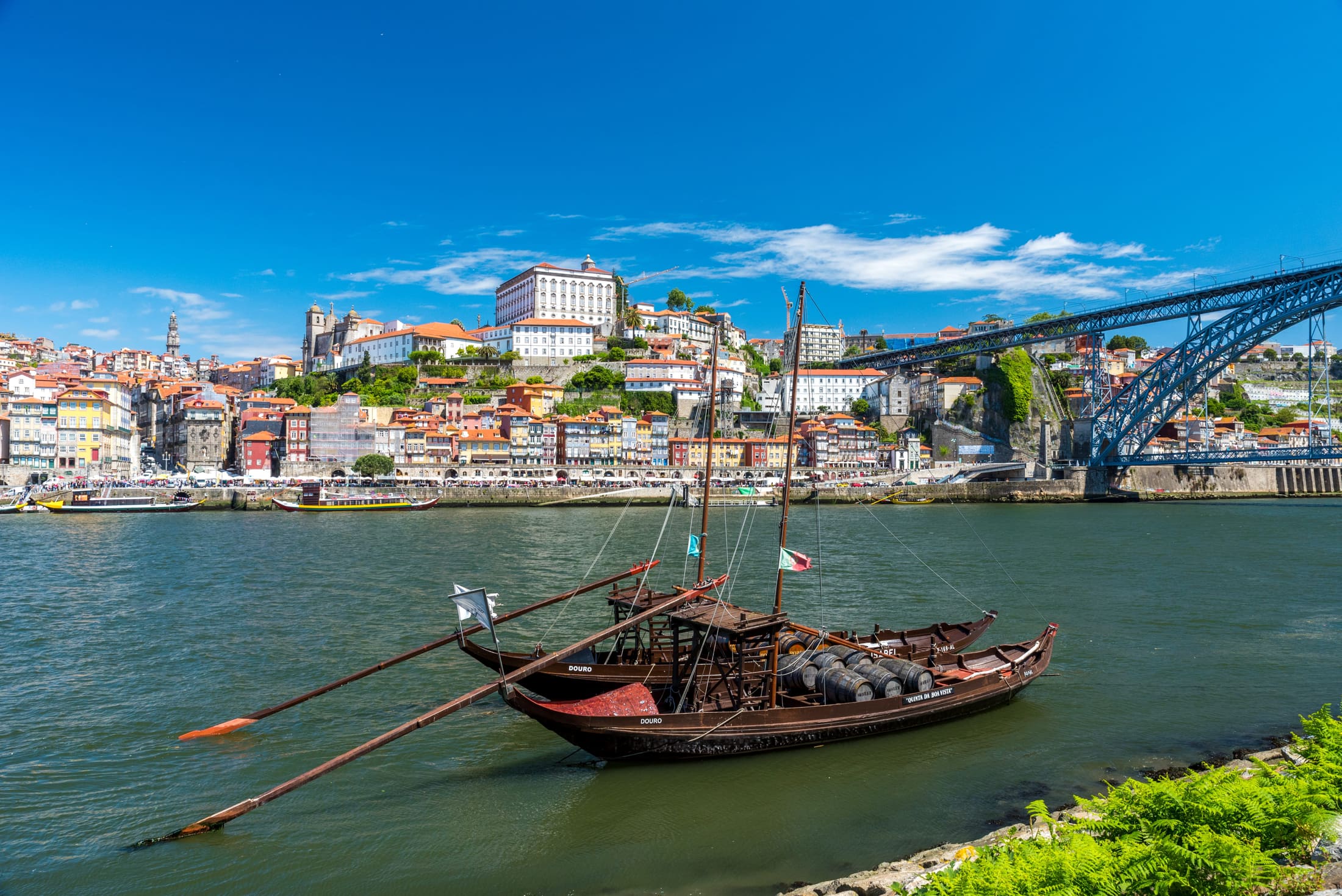
Douro River Cruise Portugal: which route should you choose?
Start with time. Then decide how much of that time you want to spend on the boat.
If you have only one hour in Porto, take the Six Bridges cruise. If you have one full day and mainly want scenery, choose a Porto to Regua or Porto to Pinhao day cruise. If you care about wine tastings, lunch, and a less rigid day, go to the Douro Valley first, then take a shorter local cruise from Pinhao or Regua.
| Route type | Best for | Typical time | What you get | Watch-outs |
|---|---|---|---|---|
| Six Bridges cruise in Porto | First Porto visit, short stay, arrival day | 50-60 minutes | Porto and Gaia waterfront, bridges, easy boarding | It is not the Douro Valley |
| Porto to Regua day cruise | Scenic full day with easier valley entry | 9-10+ hours | Long river journey, locks, lunch, Regua area | Boat-heavy day, limited winery freedom |
| Porto to Pinhao day cruise | Classic vineyard scenery | 11-12+ hours | Deeper Douro Valley views, often lunch and return transfer | Very long day, inclusions vary |
| Train/private transfer plus Pinhao cruise | Wine travelers and flexible planners | Full day | Scenic travel, 1-2 hour valley cruise, tasting and lunch options | Needs schedule and booking coordination |
| Regua to Pinhao local cruise | Travelers already in the valley | 1-3 hours or half day | Strong scenery without an all-day cruise from Porto | You must get to Regua or Pinhao first |
| Multi-day hotelship | Cruise-first travelers | 5-8 days | Portugal river cruise with ports and excursions | Less independent route flexibility |
Here is the simplest way to think about it: the farther you travel into the Douro Valley by boat, the more of your day you'll spend on the water. That can be wonderful if you want to sit back and watch the landscape change. It can be frustrating if your dream is actually wine estates, village time, or a slower lunch.
Planning a wider Portugal route? If the Douro needs to fit around Lisbon, Porto, Sintra, or the Algarve, Julia can build the sequence through the Travel Planner service so the day makes sense inside the full trip.
First, know the difference: Porto river cruise vs Douro Valley cruise
This is the most important distinction. A Douro cruise in Porto and a Douro Valley cruise are both on the Douro River, but they are not the same experience.
Six Bridges cruise: easy Porto activity
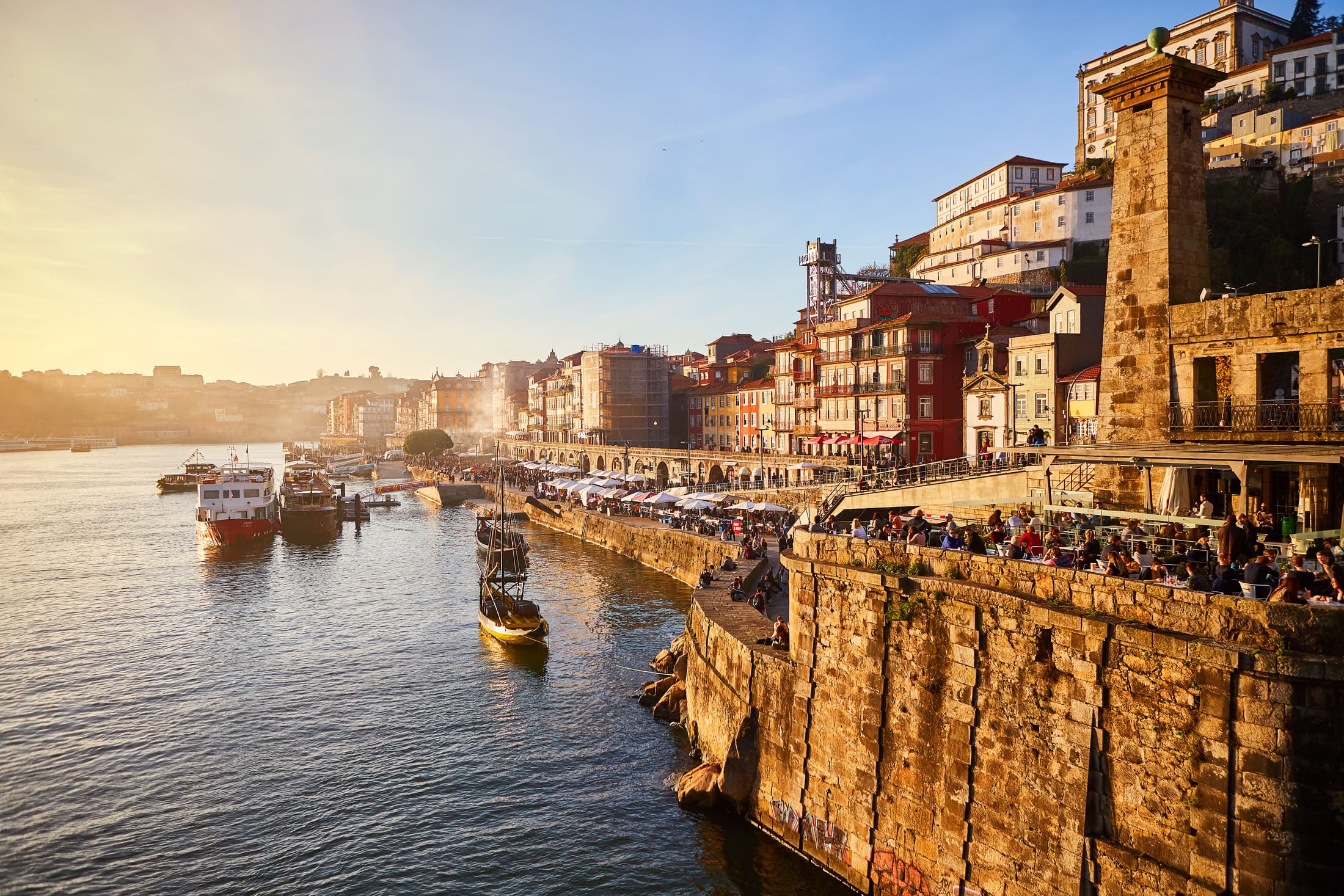
The Six Bridges cruise usually leaves from Ribeira or Vila Nova de Gaia and stays around Porto and Gaia. It is short, simple, and photogenic. You see the riverfront, the port wine cellars, Dom Luis I Bridge, Maria Pia, Sao Joao, Infante, Freixo, Arrabida, and the city from water level.
This is the right choice if you have limited time, want a light first-day activity, or want to see Porto without adding another full-day trip. It also works well before or after a port tasting in Gaia.
But be clear about what it is. The Six Bridges cruise is a Porto city cruise. It does not take you through the terraced vineyards of the Alto Douro Wine Region.
That makes it ideal for someone like Emma, who arrives in Porto at 15:00 after two travel days and has dinner booked in Ribeira. A full Douro Valley day would be too much. A sunset Six Bridges cruise gives her the river, the bridges, and that first Porto feeling without making arrival day too complicated.
For more city context around that kind of short Porto stay, pair it with the Porto wine tour guide rather than trying to force a valley trip into a spare afternoon.
Douro Valley cruise: wine-country route
A Douro Valley cruise travels inland, toward places such as Regua, Pinhao, Pocinho, or Barca d'Alva, depending on the itinerary.
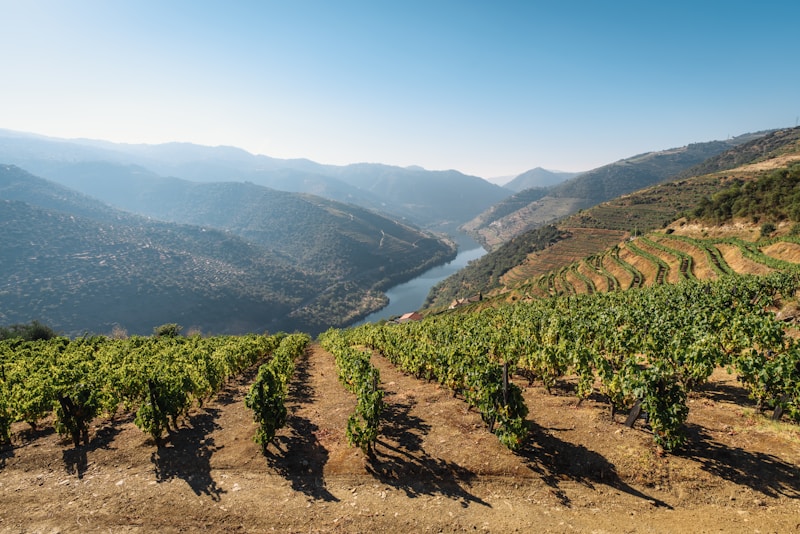
This is where the river begins to feel like wine country: terraced slopes, quintas, locks, quieter stretches of water, and the slow reveal of the valley.
The official APDL overview describes the Douro Navigable Waterway as about 210 km from the river mouth to Barca d'Alva, with five locks overcoming a 125 m elevation difference. That is why full-river itineraries are not a quick Porto add-on. They require time.
UNESCO also gives the valley its deeper context: the Alto Douro Wine Region has been shaped by roughly 2,000 years of wine production. When people imagine a Douro cruise, this vineyard landscape is usually what they mean.
The main Douro cruises from Porto
Most travelers comparing Douro River cruises from Porto are really choosing between three options: Porto to Régua, Porto to Pinhão, or a longer multi-day cruise.
Porto to Regua: the practical full-day option
Regua is one of the main gateways into the Douro Valley. It is practical, easier to reach than deeper valley stops, and common in full-day cruise programs from Porto.
This route can be a good compromise if you want the feeling of a full river journey without choosing the longest possible day. Many cruises include the outbound journey by boat and the return by road or rail, with lunch often included as part of the package.
Choose Porto to Regua if:
- You want a full-day Douro cruise, but not the most exhausting version.
- You care more about river scenery than visiting several wineries.
- You like the idea of passing through locks.
- You want a structured day with fewer independent decisions.
Watch the details. Some Regua routes feel very boat-focused, which is exactly right for some travelers and too passive for others. If your priority is tasting wine at a specific estate, this may not be the best structure.
Porto to Pinhao: the classic scenery choice
Pinhao is often the place travelers picture when they think of the Douro Valley. It sits deeper in the vineyard landscape, and the scenery around it feels more dramatic and wine-focused.
A Porto to Pinhao cruise can be beautiful, but it is a long day from Porto. Depending on the operator and direction, the day may include boat, bus, train, lunch, and a fixed return. That structure is useful if you want the operator to coordinate timing and return transport. It is less useful if you want to choose your wineries carefully.
Choose Porto to Pinhao if:
- The landscape is the main reason you are going.
- You are comfortable with a long day.
- You want the classic Douro vineyard view from the river.
- You do not mind a fixed schedule.
This is where I would be careful with expectations. If an itinerary says "wine tasting included," read what that means. It might be a proper estate visit, a short tasting stop, or a glass of Port connected to the meal. Those are very different experiences.
Porto to Barca d'Alva or border routes: usually not a day trip
Barca d'Alva and the Spain-border section belong more naturally to longer Douro itineraries. Roteiro do Douro notes that one day is not enough to cover the full length of the river, which is why fuller routes require two or more days.
If you are dreaming of a complete portugal river cruise, this can be a wonderful travel style. But it is not the same as choosing a day trip from Porto. A multi-day river cruise means the cruise is the structure of the holiday, with ports, excursions, meals, and a different rhythm from independent Portugal travel.
Choose this only if you want the river to be the center of the trip.
A smarter alternative: go to the valley, then take a shorter cruise
For many travelers, the best Douro cruise is not the one that starts in Porto. It is a shorter cruise inside the valley, paired with good transport and a well-planned day.
That may sound less grand, but it often feels better.
Train to Pinhao plus a short boat ride
The Douro train line is one of the loveliest ways to approach the valley, especially on the stretches where the railway runs close to the river. If schedules work, you can take the train from Porto toward Pinhao, have lunch, take a short 1-2 hour boat ride, and return later the same day.
This suits independent travelers who do not mind checking timetables and keeping the day simple. It is not ideal if you want multiple winery visits, because the "last mile" from station to estate can be awkward. Many quintas are not right beside the platform.
Before writing this into a final itinerary, verify current CP train times. The difference between one convenient return train and a long wait matters.
Private driver or planned day plus short cruise
This is often the best fit for couples, families, older parents, and wine-focused travelers. You travel into the valley by road with more control over timing, take a short cruise from Pinhao or Regua, and still leave room for lunch and one or two tastings.
Think of the boat as one beautiful piece of the day, not the entire day.
For example, Daniel and Priya wanted "a Douro cruise from Porto" for their anniversary, but what they really wanted was a relaxed lunch, one excellent tasting, photos in the vineyards, and a river moment. A 12-hour boat-heavy day would have given them more time sitting down, but less of what they cared about. A planned valley day with a shorter Pinhao cruise gave them the river and the wine without rushing dinner back in Porto.
This is where local planning helps. The right order depends on your travel dates, where you're staying, which estates are open, whether you plan to taste wine, and how late you're comfortable getting back.
If you want hotels, transfers, tastings, cruise tickets, restaurants, and confirmations coordinated for you, Travel Support is the better fit than trying to manage every supplier separately.
Regua to Pinhao local cruise
A local Regua to Pinhao or Pinhao loop cruise is a strong option if you are already in the valley or can get there easily. It gives you the scenic river section without spending the entire day traveling by boat from Porto.
This can work especially well if you stay overnight in the Douro. You can enjoy the river in the morning or afternoon, then leave space for a winery visit, dinner, and the quiet evening light that day-trippers miss.
For wine planning around this choice, connect the cruise decision with the Douro Valley wine tasting guide. The best day is rarely "cruise plus as many wineries as possible." It is usually one or two good experiences timed well.
How to choose by traveler type
There is no single best route. There is only the route that fits your trip.
If this is your first time in Porto
If Porto itself is new to you, do not rush past it. The city deserves time for the riverfront, Gaia cellars, food, tiles, viewpoints, and wandering.
With one or two nights, I would usually choose the Six Bridges cruise and keep the Douro Valley for another trip unless wine is the main purpose. With three nights, a Douro day becomes more realistic.
If wine is the main reason
Do not automatically choose the longest cruise. Wine travelers often do better with a shorter boat ride and more control over tastings.
A full-day cruise from Porto can be scenic, but it may not give you as much time at the wine estates as you expect. A private or carefully planned day can include a short Pinhao cruise, lunch, and one or two meaningful tastings. That is usually more satisfying than four rushed stops or six passive hours on the boat.
If you are traveling with children or older parents
The Douro is beautiful, but long days are still long days. A 10-12 hour outing can feel very different with a child who needs movement, a parent who struggles with steps, or a group with different energy levels.
Before booking, check:
- How long you are actually on the boat.
- Whether there are toilets onboard.
- Whether the boat has shade or covered seating.
- How many steps are involved at boarding.
- Whether lunch timing works for your group.
- How you return to Porto if someone gets tired.
Marta traveled with her father, who loves wine but dislikes long bus rides after dark. On paper, the longest Porto to Pinhao cruise looked like the "best value." In real life, a shorter valley cruise with private transfer and an earlier return gave him the river, the vineyards, and a comfortable day. That is the kind of detail a booking page rarely explains clearly.
If you want the easiest low-planning option
An organized full-day Douro cruise from Porto can be the right choice. It removes many decisions: boarding point, lunch, route, and return transfer.
Just read the itinerary slowly. Look for exact departure location, return time, meal details, whether the guide is live or audio, and whether the winery element is meaningful or brief. If the page is vague, ask before booking.
If you are building a Portugal itinerary
The Douro should fit the trip, not overpower it.
For a 7-day first Portugal itinerary, one Douro day from Porto may be enough. For 10-14 days, an overnight in the valley can make sense if you love wine, scenery, or slower travel. For a full river-cruise holiday, the Douro becomes the spine of the trip, and the rest of Portugal needs to fit around it.
That is a different planning question from "which cruise is prettiest?" It is really about route flow.
Upstream or downstream: does direction matter?
Yes, but not as much as travelers think.
Going upstream from Porto means the scenery gradually shifts from city riverbanks into wine country. The locks can feel memorable because you sense the river rising toward the interior.
Going downstream toward Porto can be beautiful near the end of the day, especially if arrival lines up with softer light. It can also feel easier psychologically because you are moving back toward your base.
In practice, choose the direction that gives you the better day. A romantic downstream arrival is not worth a poor return time, rushed lunch, or missed train. Timing beats theory here.
What to Check Before Choosing a Douro River Cruise from Porto
These are the practical details I would confirm before booking.
Route and timing
Confirm the exact route, not just the title. "Douro Valley cruise" might mean Porto to Regua, Porto to Pinhao, a bus to the valley plus a one-hour cruise, or a local Pinhao loop.
Check:
- Start point: Ribeira, Gaia, Estiva, Regua, Pinhao, marina, hotel pickup, or train station.
- End point: same dock, different town, bus return, train return, or hotel drop-off.
- Total duration, not only boat time.
- Realistic return time to Porto.
- Whether the route is upstream, downstream, or mixed.
Inclusions
Do not assume all full-day cruises include the same things. Look carefully at meals, drinks, tastings, guide language, and return transport.
If you have dietary needs, ask in advance. If a winery visit matters, confirm the estate name and the tasting format. A glass with lunch is not the same as a guided visit to a quinta.
Comfort and accessibility
Rabelo boats, larger cruise boats, yachts, and hotelships feel different. A charming boat is not useful if boarding is difficult for your group.
Ask about steps, toilets, shade, indoor space, child seating, and luggage rules if you are connecting the cruise to an overnight stay. Travelers with mobility needs should confirm access directly with the operator, not rely on a generic listing.
Season and lock operation
Regular Douro cruise season is usually strongest from spring through autumn, with more options in summer and harvest period. Roteiro do Douro notes that regular cruise season starts in mid-March and runs toward the end of the year, while inland lock-dependent options are more restricted outside the regular season.
That does not mean every cruise runs every day. Weekdays, winter dates, river conditions, and operator schedules can change availability. Verify before you build the rest of your itinerary around a specific boat.
Train schedules
If your plan uses the Douro train line, check current CP schedules close to your date. The train can be part of a beautiful day, but only if the timing works both ways.
Do not plan a tight dinner, flight, or prepaid evening activity after a DIY Douro day. Leave margin. Portugal is much kinder when you do not schedule every minute.
Best time of year for a Douro cruise
April, May, September, and October are often the most comfortable months for exploring the Douro Valley. You usually get better temperatures than peak summer, and the valley feels alive without the same level of heat.
Summer brings more cruise options, longer daylight, and higher demand. It can also be hot, especially inland. If your group struggles with heat, shade and boat comfort matter.
September is harvest season, which makes the Douro especially exciting for wine lovers. It also requires earlier planning because wineries, hotels, and tours can be busy.
Winter can still be atmospheric, but you need to be more flexible. Short Porto cruises may be easier to find than inland Douro Valley cruises, and operator schedules can be limited.
Suggested route decisions for common Porto trips
You have only one evening in Porto
Take the Six Bridges cruise, ideally when the light is soft, then have dinner in Ribeira or Gaia. This gives you the river without pretending you have visited the Douro Valley.
You have two full days in Porto
One city day and one Douro day can work, but choose carefully. If you want low planning and scenery, take a full-day organized Douro cruise. If wine matters more, choose a planned valley day with a shorter cruise.
You have three nights in Porto
This is the sweet spot. You can enjoy Porto properly, visit Gaia, and still give one full day to the Douro Valley without feeling as if Porto became only a sleeping base.
You have 10 or more days in Portugal
Consider staying one night in the Douro if wine, views, and slower travel are important to you. An overnight changes the mood completely. You get sunset, dinner, quieter mornings, and less pressure to make one day carry everything.
For first-time travelers, this decision should sit inside the whole itinerary. An overnight stay in the Douro Valley may be perfect, or it may mean less time in Lisbon, Sintra, the Algarve, Alentejo, or Madeira. The right choice depends on your travel style.
FAQs about Douro cruises from Porto
Is a Douro River cruise from Porto worth it?
Yes, if you choose the right route. The Six Bridges cruise is worth it for Porto views, while a full-day Douro Valley cruise is worth it if you enjoy slow scenery and do not need deep winery time.
If wine tastings and lunch are your priority, consider a shorter valley cruise combined with planned transport and estate visits.
Is the Six Bridges cruise the same as a Douro Valley cruise?
No. The Six Bridges cruise is on the Douro River in Porto, but it stays around Porto and Vila Nova de Gaia. It does not travel inland to the vineyard landscape of the Douro Valley.
This is where many travelers get confused when choosing a Douro River cruise from Porto.
Should I choose Regua or Pinhao?
Choose Regua if you want a practical gateway and a slightly easier full-day structure from Porto. Choose Pinhao if your priority is classic vineyard scenery and a stronger wine-country feeling.
The better choice depends on the schedule, cruise type, lunch plan, tasting plan, and whether you are staying overnight.
Can I do Porto to Pinhao by train and cruise back?
Sometimes combinations exist, but schedules and availability vary. For most travelers, it is easier to take the train or private transfer into the valley, do a short local cruise from Pinhao or Regua, and return by the most reliable transport option.
Always verify live schedules before committing to a DIY plan.
Are Douro cruises good for families?
Shorter cruises are usually easier for families. Full-day cruises can work if your children enjoy slow travel, but check duration, shade, toilets, meal timing, and return transport.
For families with mixed ages, a private or semi-private valley day with a shorter cruise is often more comfortable.
What is the best Douro cruise for wine lovers?
For wine lovers, the best Douro cruise is often a short Pinhao or Regua cruise inside a day built around tastings and lunch. A good wine day usually depends more on tasting times, lunch, and route order than on spending every possible hour on the boat.
If you want to visit specific quintas, plan the wine route first and add river time around it.
Do I need to book Douro cruises in advance?
Yes, especially for weekends, high season, harvest period, private boats, dietary needs, or accessible boarding. You should also book ahead if your Portugal itinerary depends on a specific day in the Douro.
Can a Douro cruise replace visiting wineries?
Not really. A cruise gives you the river landscape. Wineries give you the wine, people, cellars, terraces, and tasting context.
Some cruise programs include tastings, but they are not all equal. If wine is important, read the details before assuming the cruise covers it.
Final advice: choose the route, not the label
A Douro cruise can be one of the loveliest parts of a Portugal trip. It can also become a very long day that does not match what you actually wanted.
Choose the Six Bridges cruise for Porto views. Choose Porto to Regua or Porto to Pinhao if you want the river journey itself. Choose a short Pinhao or Regua cruise with planned transport if you want the best balance of scenery, wine, lunch, and flexibility. Choose a multi-day Portugal river cruise if the cruise is the holiday.
The Douro rewards calm planning. Decide what the day is for, then choose the route that supports it.
If you want Julia to build the Douro into a realistic Portugal route, start with Travel Planner. If you want help coordinating bookings, transfers, restaurants, cruise timing, and provider confirmations, Travel Support is the better fit.