
Table of Contents
- How to Use This Lisbon Tourist Map
- Lisbon Attractions Map by Neighborhood
- Alfama and Castelo: Old Lisbon, Viewpoints, and Fado
- Baixa, Rossio, and Chiado: The Easiest First Lisbon Walk
- Bairro Alto, Principe Real, and Cais do Sodre: Evenings, Food, and Riverfront
- Belem and Ajuda: Monuments, Museums, and the Riverside
- Parque das Nacoes: Modern Lisbon on the Eastern Map
- Suggested Lisbon Sightseeing Routes by Time Available
- Common Lisbon Map Mistakes
- Is the Lisboa Card Worth It for a Lisbon Tourist Map?
- When a Private Lisbon Tour Makes More Sense Than a Map
- FAQ: Lisbon Tourist Map
- Final Recommendation: Map Lisbon by Energy, Not Just Attractions
A useful Lisbon tourist map should group the city by neighborhoods, not just scatter pins across a screen. For a first visit, think in clusters: Alfama and Castelo for old Lisbon, Baixa and Chiado for easy orientation, Belem for monuments and museums, Cais do Sodre for the riverfront, and Parque das Nacoes for modern Lisbon.
The mistake I see most often is simple: travelers look at a Lisbon attractions map and assume the city is one compact walking route. It is not. Lisbon has steep hills, cobblestones, viewpoints, riverfront distances, and a few major sights that sit well outside the historic core.
When I help travelers map Lisbon, I do not start with the longest list of pins. I start with the day: where are you sleeping, how much walking feels good, and which neighborhoods belong together. This guide gives you the Lisbon sightseeing map logic I use with clients, so you can see more of the city without turning it into a forced march.
If Lisbon is part of a wider Portugal route, Julia can build the city days into a custom Portugal itinerary with Sintra, Porto, Douro, Algarve, or Alentejo placed around realistic timing.
Key Takeaways
- The best Lisbon tourist map groups sights into neighborhood clusters: Alfama/Castelo, Baixa/Chiado, Bairro Alto/Principe Real, Cais do Sodre, Belem/Ajuda, and Parque das Nacoes.
- Alfama, Graca, and Castelo look close on a map, but hills and cobblestones make them slower than Baixa, Chiado, and the riverfront.
- Belem and Parque das Nacoes work best as separate half-day areas, not casual add-ons to an already full old-city walk.
- First-time visitors should prioritize route flow over the number of attractions pinned on a Lisbon sites map.
- A private walking tour or tuk-tuk tour can be worth it when the city needs to feel easy, especially with short stays, families, or older travelers.
How to Use This Lisbon Tourist Map
Before choosing individual sights, divide Lisbon into useful areas. This is the difference between a pretty map and a day that actually works.
Think in clusters, not single attractions
Lisbon is best planned in clusters because the city changes character quickly. Baixa is flat and gridded. Alfama is older, tighter, and steeper. Belem is west along the river. Parque das Nacoes is east and modern. Sintra is not a Lisbon neighborhood at all, even though many first-time visitors try to treat it like one.
If you open a Lisbon what to see map and start choosing the most famous pins, you may end up with Belem Tower, Sao Jorge Castle, the Oceanario, Rossio, and a Fado dinner in one day. That looks efficient on a phone. In real life, it is several different days fighting each other.
Plan for hills, heat, and cobblestones
Lisbon rewards walking, but it does not reward pretending every walk is equal. The official Visit Lisboa Alfama guide describes Alfama as steep, cobbled, and best discovered slowly, with stops for viewpoints, atmosphere, and fado. That is exactly right.
A Lisbon map looks compact until you add hills. Alfama, Graca, and Castelo can turn a casual wander into the hardest part of the day. Baixa, Chiado, and the riverfront are easier to combine, though Chiado still climbs.
Keep Belem and Parque das Nacoes separate
Belem sits west of the center. Parque das Nacoes sits east. Both are worth considering, but neither belongs in the middle of a packed Alfama/Baixa/Chiado day unless you enjoy crossing the city more than seeing it.
This is where a Lisbon sightseeing map becomes useful: not because it tells you every attraction, but because it shows you which areas should not be jammed together.
Lisbon Attractions Map by Neighborhood
Use this table as your practical Lisbon attractions map. It is not every possible stop. It is the structure I would use for a first-time visitor who wants the city to make sense.
| Neighborhood cluster | What to see | Best for | Route note |
|---|---|---|---|
| Alfama and Castelo | Se Cathedral, Miradouro de Santa Luzia, Portas do Sol, Castelo de Sao Jorge, fado streets | Old Lisbon, viewpoints, history, atmosphere | Start early or accept a slower hill day |
| Baixa and Rossio | Praca do Comercio, Rua Augusta, Rossio, Praca da Figueira, Santa Justa area | First orientation, flat walking, arrival day | Easiest central cluster for most travelers |
| Chiado, Bairro Alto, Principe Real | Cafes, theaters, shops, viewpoints, restaurants, nightlife | Food, shopping, evenings, slower wandering | Good after Baixa, but watch the climbs |
| Cais do Sodre and riverfront | Ribeira das Naus, Cais das Colunas, Time Out Market area, ferries, sunset walks | River views, casual meals, evening plans | Easy to pair with Baixa or Chiado |
| Belem and Ajuda | Jeronimos Monastery, Belem Tower, Padrao dos Descobrimentos, MAAT, gardens, pastries | Monuments, museums, riverside time | Treat as a half day, often by train/tram/taxi |
| Parque das Nacoes | Oceanario, Oriente Station, riverfront, modern architecture, cable car area | Families, architecture, bad-weather backup | Best as a separate east-side outing |
| Day-trip edge | Sintra, Cascais, Costa da Caparica, Arrabida | Palaces, coast, beaches, nature | These need separate planning, not leftover time |
For a deeper trip-length decision, read how many days you need in Lisbon before locking your route.
Alfama and Castelo: Old Lisbon, Viewpoints, and Fado
Alfama and Castelo are the emotional old-city part of the Lisbon tourist map. This is where travelers imagine Lisbon before arriving: tiled facades, narrow lanes, laundry above the street, fado houses, viewpoints over the Tagus, and the castle above it all.
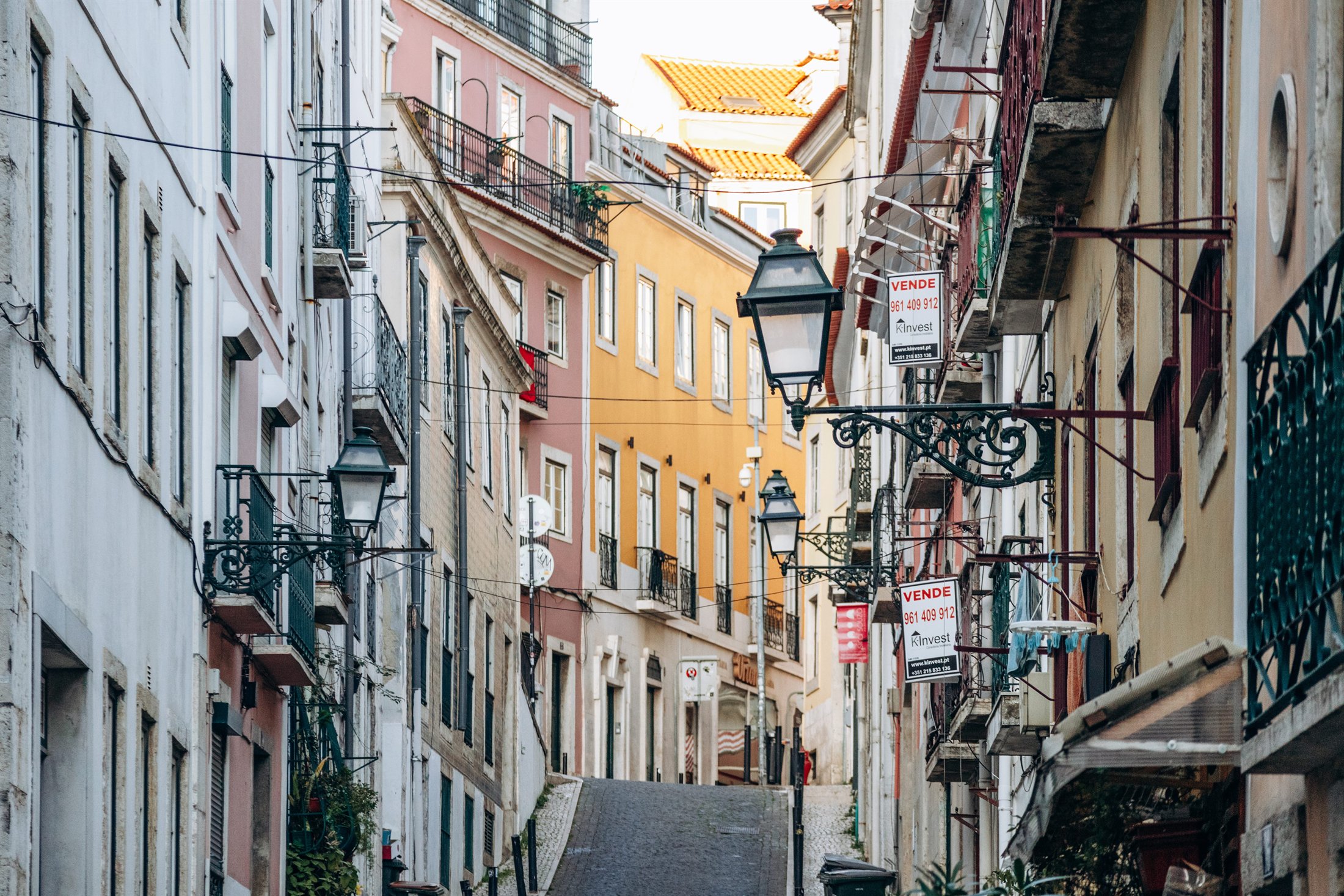
The core sights are Se Cathedral, Miradouro de Santa Luzia, Portas do Sol, Castelo de Sao Jorge, and the streets between them. The official Castelo de Sao Jorge website explains that the castle's quadrangular perimeter is fortified by 11 towers. Before planning your visit, check the castle's official Plan Your Visit section for current schedules and ticket options.
The best way to plan Alfama is not to draw a perfect line. It is to decide how much climbing you want. Some travelers start higher, then wander down. Others begin near the cathedral and climb slowly toward Santa Luzia and Portas do Sol. Both can work.
What does not work well is rushing Alfama after a full Belem morning and a long lunch. The neighborhood wants legs, patience, and space for getting slightly lost.
I once reviewed a Lisbon plan for Anna and Chris, who had two days before flying to Madeira. Their map included Alfama, Belem, Chiado, Bairro Alto, Sintra, Cascais, a fado dinner, and a food tour. Each item was good. Together, the plan had no air. We kept one strong Alfama/Baixa/Chiado day, moved Belem to the second morning, and removed Sintra. They saw fewer pins and had a much better Lisbon.
If you want the first day to feel clear instead of improvised, a private Lisbon walking tour can make Alfama, Baixa, and Chiado easier to read. If hills are the issue, a Lisbon tuk-tuk tour can be the smarter overview, especially with older travelers or children.
Baixa, Rossio, and Chiado: The Easiest First Lisbon Walk
Baixa, Rossio, and Chiado form the simplest central sightseeing cluster. If you have just arrived, or if your group is tired, this is usually the easiest place to begin.
Start around Praca do Comercio, then move through Rua Augusta toward Rossio and Praca da Figueira. From there, you can climb toward Chiado, stop for coffee, browse shops, or continue toward Bairro Alto and Principe Real if the day still feels light.
Visit Lisboa describes Praca do Comercio as a Baixa square right on the Tagus, formerly Terreiro do Paco, where the royal palace once stood. It is one of Lisbon's best orientation points because the river, downtown grid, and historic center all meet here.
This part of the Lisbon sites map is also useful for jet lag. You can do a short walk, eat nearby, and return to the hotel without making the day too complicated. A first Lisbon day does not need to prove anything.
If you have one day in Lisbon, I would usually choose Baixa, Chiado, Alfama, and one viewpoint over Belem or Parque das Nacoes. The city center gives you the strongest first impression.
Bairro Alto, Principe Real, and Cais do Sodre: Evenings, Food, and Riverfront
Bairro Alto, Principe Real, and Cais do Sodre are not the same mood, but they connect well on a Lisbon sightseeing map.
Bairro Alto is quiet in the morning and livelier at night. Principe Real is better for gardens, concept shops, cafes, and a calmer upscale feel. Cais do Sodre and the riverfront are useful for casual meals, ferry connections, sunset walks, and the route toward Belem.
Ribeira das Naus is especially useful when your day needs a softer finish. Visit Lisboa describes it as a rehabilitated former shipyard area that now connects with Cais das Colunas, Praca do Comercio, and Cais do Sodre. It is not where you go to collect another famous monument. It is where you let the city breathe a little.
For couples, this cluster can become a relaxed evening plan: Chiado or Principe Real for drinks and dinner, then a riverfront walk. In warmer months, a private Lisbon sunset boat tour can also make sense if the rest of the day is kept light.
The warning is simple: do not plan nightlife after an exhausting hill day unless your group genuinely has the energy. Lisbon evenings are better when you are not secretly counting the steps back to the hotel.
Belem and Ajuda: Monuments, Museums, and the Riverside
Belem and Ajuda are the west-side cultural cluster on a Lisbon attractions map. This area is tied to Portugal's maritime history, monumental architecture, museums, gardens, and the river.

The main sights are Jeronimos Monastery, Belem Tower, Padrao dos Descobrimentos, MAAT, Praca do Imperio, the riverfront, and the famous pastry stop most travelers already have saved. Visit Lisboa's Belem/Ajuda guide highlights Jeronimos and Belem Tower as the famous UNESCO-linked anchors, but also points to the area's contemporary cultural spaces and gardens.
Jeronimos Monastery deserves special care in the plan. Visit Lisboa identifies it as a UNESCO World Heritage site since 1983 on its Tagus route page. That same source lists transport options including train from Cais do Sodre and tram 15E/18E, but current schedules and entry rules should be checked before your final plan.
The practical advice: give Belem a half day. Do not put it between Alfama and Parque das Nacoes as if Lisbon were a straight line of monuments. You will spend too much of the day in transit.
Maya, a first-time visitor from Boston, sent me a map with Belem Tower at 9:00, Alfama at 11:30, a museum at 14:00, and Parque das Nacoes before dinner. The map made it look possible. Her actual wish list was simpler: great photos, history, pastries, and one beautiful dinner. We made Belem the morning, added a riverside walk, and saved Alfama for the next day. The trip became calmer immediately.
If your Lisbon route includes timed tickets, restaurant bookings, and transport for several people, Travel Support is the better fit when you want the timing and details coordinated, not just suggested.
Parque das Nacoes: Modern Lisbon on the Eastern Map
Parque das Nacoes is the part of Lisbon many first-timers skip, and that can be the right decision on a short stay. But it belongs on a complete Lisbon tourist map because it shows a very different side of the city.
Visit Lisboa describes Lisboa Oriente and Parque das Nacoes as the result of the 1998 World Exhibition urban plan. The area includes the Oceanario de Lisboa, Casino Lisboa, Pavilhao do Conhecimento, Camoes Theatre, Oriente Station, a dock, green park space, and Tejo Park along the river.
This is not the place for medieval lanes or fado atmosphere. It is better for families, architecture lovers, aquarium visits, bad-weather plans, and travelers who want spacious riverfront walking without the old-city hills.
Should it be on a first two-day Lisbon itinerary? Usually no. Should it be considered on a four- or five-day stay, especially with children? Yes.
The key is to know what role it plays. Parque das Nacoes is not "one more stop near the center." It is an east-side outing.
Suggested Lisbon Sightseeing Routes by Time Available
Here is how I would turn a Lisbon sightseeing map into real days.
One day in Lisbon
Stay central. Start at Praca do Comercio, walk through Baixa and Rossio, climb or ride toward Chiado, then choose Alfama and one viewpoint. End with dinner in Alfama, Chiado, Principe Real, or near your hotel.
Skip Belem, Parque das Nacoes, and Sintra unless your one day is part of a very specific private plan. One day is for the core city.
Two days in Lisbon
Use day one for Alfama, Baixa, Chiado, and the riverfront. Use day two for Belem and a slower afternoon or evening back in the center.
This is the minimum structure I like for first-timers. It gives you old Lisbon, central Lisbon, and west Lisbon without making every hour feel booked.
Three days in Lisbon
Three days is the sweet spot. Use one day for Alfama/Baixa/Chiado, one day for Belem and the riverfront, and one flexible day for food, museums, Principe Real, Bairro Alto, viewpoints, or a slower catch-up.
If you are also planning a wider first Portugal route, compare this with a seven-day Portugal itinerary before adding Porto, Douro, or Algarve.
Four or five days with Sintra or Cascais
With four days, add Sintra as a separate day. With five days, you can add Cascais, a second museum day, or a slower Lisbon day.
Do not treat Sintra as an extra Lisbon neighborhood. It is a full planning day with palace timing, hills, transport, and route decisions. For options beyond the city, use this guide to the best day trips from Lisbon.
Common Lisbon Map Mistakes
The map is not the problem. The problem is believing it too literally.
Trying to do west, center, and east in one day
Belem, Alfama, and Parque das Nacoes are all worth seeing for the right traveler. They do not belong in the same normal sightseeing day. Choose one anchor area, then add nearby stops.
Underestimating Alfama and Graca
This is the classic map mistake. The streets are charming because they are old, narrow, and uneven. That also means they are slower. Add heat, crowds, or tired legs, and the day changes fast.
Treating Tram 28 as guaranteed sightseeing
Tram 28 is iconic, but it can also mean queues, crowding, and pickpocket awareness. If it works naturally, enjoy it. If the line is long, do not let it own your morning.
Booking timed entries too tightly
This matters most for Belem, museums, and day trips such as Sintra. Leave space between timed tickets, meals, and transport. Lisbon is more enjoyable when your day can absorb a delay.
Staying far from your first-day cluster
Hotel location changes the map. A cheaper hotel can become expensive in time and taxis if it is awkward for the areas you actually want to see. For short stays, choose convenience over novelty.
Is the Lisboa Card Worth It for a Lisbon Tourist Map?
The Lisboa Card can be useful, but it is not automatically the right answer for every trip. The official Lisboa Card page currently describes free admission to over 50 museums and cultural venues, unlimited public transport for 24, 48, or 72 hours, and discounts.
That sounds attractive, but the same planning logic applies: only buy it if it matches your actual route. If your day is mostly walking Alfama, Baixa, Chiado, and a long lunch, you may not use enough paid entries or transport to justify it. If you are grouping Belem monuments, museums, and transit-heavy days, it may make more sense.
Before buying, check current closure notes, capacity rules, and whether the specific places on your route are included. A card does not replace a plan.
When a Private Lisbon Tour Makes More Sense Than a Map
A map is enough if you enjoy independent wandering, have good walking energy, and are comfortable changing plans. Lisbon is a wonderful city for that.
A private tour makes more sense when the stakes are higher: one short day, older parents, children, mixed mobility, a special occasion, or a group that does not want to spend the morning debating hills and transport.
Choose a walking tour if you want the city explained as you move through Alfama, Baixa, and Chiado. Choose a tuk-tuk if the goal is viewpoints, hills, and an easier overview. Choose Travel Planner if Lisbon needs to fit into a wider Portugal route with Sintra, Porto, Douro, Algarve, or Madeira.
For families and groups, this is often less about luxury and more about energy. A family I worked with had grandparents, two teenagers, and one child who needed a quiet afternoon most days. A standard Lisbon sites map would have pushed them through every viewpoint. We used a tuk-tuk for the hillier sections, kept Belem as a separate half day, and made Sintra private and focused. They did not see more than everyone else. They enjoyed more of what they saw.
That is the point of good planning. A strong route is the one your group can still enjoy at 17:00, not the one that tries to cover every possible stop.

FAQ: Lisbon Tourist Map
What is the best area of Lisbon for sightseeing?
For first-time sightseeing, Baixa, Chiado, and Alfama are the best starting areas. Together, they give you central squares, old streets, viewpoints, history, food, and an easy sense of Lisbon's layout.
Can you walk between Lisbon attractions?
Yes, many central Lisbon attractions are walkable, especially around Baixa, Chiado, Alfama, and the riverfront. The caution is that Lisbon is hilly, with cobblestones and stairs in areas such as Alfama, Graca, Castelo, and Bairro Alto.
What should be on a Lisbon tourist map for first timers?
A first-timer Lisbon tourist map should include Alfama, Castelo, Baixa, Rossio, Chiado, Bairro Alto, Principe Real, Cais do Sodre, Belem, Parque das Nacoes, and day-trip markers for Sintra and Cascais. The map should also group these areas into realistic routes.
Is Belem walkable from central Lisbon?
Belem is not a practical casual walk from central Lisbon for most visitors. It is better treated as a west-side half day reached by train, tram, taxi, or private transport, depending on your hotel location and comfort.
How many days do you need to see Lisbon neighborhoods?
Three full days is the best balance for most first-time visitors. Two days can cover the essentials if you choose carefully. Four days is better if you want Sintra, and five days suits slower travelers, families, food lovers, and museum-focused trips.
Is a Lisbon sightseeing map enough, or should I book a guide?
A Lisbon sightseeing map is enough if you enjoy independent walking and have flexible time. Book a guide if you have one short day, want local context, dislike logistics, or need the route adapted for children, older travelers, mobility, weather, or a special occasion.
Final Recommendation: Map Lisbon by Energy, Not Just Attractions
The best Lisbon tourist map is not the one with the most pins. It is the one that helps you group the city by neighborhood, distance, hills, transport, and the kind of day you actually want.
Start with Alfama/Castelo, Baixa/Chiado, Belem, the riverfront, and Parque das Nacoes as separate clusters. Then choose based on your time. One day needs focus. Two days need discipline. Three days give you the city properly. Four or five days let Sintra, Cascais, museums, and slower meals breathe.
If you want Lisbon to feel clear on the ground, start with a private Lisbon walking tour or a private tuk-tuk in Lisbon. If Lisbon is only one part of a wider Portugal trip, Julia can build the full route through Travel Planner, with the right days, transfers, tours, and breathing room placed around your actual dates.
Lisbon is not a city to conquer from a map. It is a city to read in layers: hill by hill, square by square, neighborhood by neighborhood.